
Football for a child aged 6–12 is not just about the kit, goals, and эмоции на трибунах. At this age, football and physical conditioning help build a basic sense of body awareness, confidence in movement, the ability to work in a team, and the resilience to take hits — both literally and figuratively.
This article is a calm, step-by-step guide for parents. We will look at how to structure football and physical conditioning so that:
- your child develops rather than burns out;
- the exercises stay basic and safe;
- home sessions and field training complement each other;
- and, if needed, a mentor can be thoughtfully introduced into that journey.
Why Children Aged 6–12 Need Football and Physical Conditioning Together
Physical Development Through Football and General Physical Training
Between the ages of 6 and 12, children grow in spurts: posture changes, body proportions shift, and endurance develops unevenly. At this stage, it is especially important for football and physical conditioning to work together.
- Cardiovascular health and endurance. Running, active games, and changes of pace help develop the heart and lungs. This makes it easier for a child to handle not only matches, but also an ordinary school day.
- Coordination and balance. Dribbling, sudden stops, changes of direction, jumps, and turns help the body “connect” movements into one coordinated system. Fewer falls, more confidence.
- Strength and stability. Simple bodyweight exercises such as squats, planks, and lunges strengthen the legs, core, and back. This helps protect the child from overload as football demands increase.
Football without general physical preparation turns into a set of random loads. General physical training without football becomes “exercise for the sake of exercise,” and children quickly lose interest. The combination brings both health and engagement.
Psychology, Discipline, and Teamwork
Through football, a child learns much more than just how to run and kick a ball.
- Discipline. There are rules, schedules, and responsibility for one’s behavior. The child begins to see consequences: being late, not listening, or getting distracted affects the game.
- Teamwork. A child has to consider teammates, listen to the coach, and share both the ball and the space. This becomes important practice for school, social life, and future adult life.
- Attitude toward mistakes. Missing a shot, making a bad pass, conceding a goal — all of this is part of the process. Through football, children learn how to handle setbacks and keep going.
When physical conditioning is built into the program thoughtfully, a child is not just “playing,” but also begins to understand that effort, repetition, and basic exercises help them become stronger and more resilient.
Age-Specific Needs of Children Aged 6–8, 9–10, and 11–12
It is important to understand how much children change within the 6–12 age range.
Ages 6–8
Attention span is unstable, and interest is driven by play. What works best:
- short blocks of 5–10 minutes;
- minimal complex explanation, maximum simple “copy me” tasks;
- a focus on coordination, feeling the ball, and enjoying movement.
Ages 9–10
Children can concentrate for longer, understand “why,” and remember a sequence of actions.
The first elements of tactics and more conscious technique begin to appear.
At this stage, you can give clearer tasks such as: “5 repetitions of this exercise” or “2 rounds in this format.”
Ages 11–12
This is a transition toward teenage sport.
Children can better handle 60–75 minutes of structured training.
They also begin to take interest in “progress”: faster or slower, more or less resilient, which position suits them best.
Football and physical conditioning need to be built around these age-specific differences. Otherwise, training becomes either boring or too difficult for the child.
Basic
For families looking for regular training and quality mentorship.
Sessions per month
Each training session lasts 50 minutes.
900 AED / month
Included:
- 4 / 8 / 12 Training Sessions
- Welcome Kit
- TIger Progress Book
- Family Communication
Plus
best value
For families who want the mentor to take an active role in their child's development.
Sessions per month
Each training session lasts 50 minutes.
1 300 AED / month
Included:
- Development Plan
- Monthly Progress Report
- Tiger Time
- Priority Registration
Elite
maximum support
For families seeking comprehensive long-term mentorship across every key area of development.
Sessions per month
Each training session lasts 50 minutes.
2 000 AED / month
Included:
- Tiger Day
- Parent Consultation
- Priority Planning
- Family Strategy Session
- Yura Tiger Privileges
Principles of Safe Physical Conditioning in Football for Children Aged 6–12
Load and Recovery
The main rule is simple: consistency and gradual progress matter more than heroic bursts of effort.
General guidelines:
- 2–3 active football or physical training sessions per week for younger children (ages 6–8);
- 3–4 sessions for children aged 9–12, with varying intensity;
- at least one lighter day or full rest day between harder sessions.
Key recovery factors:
- sleep according to age norms (for ages 6–12, usually around 9–11 hours, though some children may need slightly more or less);
- water and food: a child should not train on an “empty tank”;
- emotional state: a child who constantly feels they “must” or “have to” usually recovers worse.
Safe Technique and Proper Equipment
Even the most basic football exercises for children can lead to injury if a few simple conditions are ignored.
Age-appropriate ball. Smaller and lighter balls are better for younger children. They reduce strain on the legs and feet and make control easier.
Surface. The training area should be flat, without holes, slippery patches, or hard curbs. At home, the space should be clear of sharp corners and nearby furniture.
Footwear.
- Outdoors: trainers or football boots that fit properly, with laces or fastenings that keep the foot secure.
- Indoors: most sessions are best done barefoot or in light gym slippers, as long as the floor is not slippery.
Technique through demonstration.
It is usually easier and safer for a child to copy what they see than to piece together a complicated verbal explanation.
Signs of Overload: When It Is Time to Slow Down
It is worth reducing the load or taking a pause if:
- the child often complains of pain in the knees, ankles, or back;
- after training, they take a long time to recover and seem gloomy, irritable, or completely drained;
- they struggle to fall asleep in the evening even though the day was very active;
- interest drops sharply: yesterday they were looking forward to football, and today it has become a repeated “I don’t want to” or “I hate these sessions.”
In that situation, it is more important to step back than to add pressure. Sometimes one or two weeks of a gentler routine is enough. In other cases, it makes sense to consult a doctor and reconsider the training plan.
Home Football Exercises for Children Aged 6–12: 20–30 Minutes of Safe Activity
Home is a good place to build physical conditioning and basic football skills, as long as space and safety are taken into account. The optimal format is 20–30 minutes, 2–3 times a week.
Warm-Up and Coordination Without the Ball
A 5–7 minute warm-up before training is the minimum:
- walking and light jogging in place;
- circular movements of the shoulders, elbows, wrists, hips, knees, and ankles;
- simple balance exercises:
- standing on one leg with support near a wall;
- a light “swallow” balance with a slight forward lean;
- step forward — freeze — step back — freeze.
These exercises help gently warm up the muscles and joints, activate coordination, and shift the child from “homework/gadget mode” into “movement mode.”
Ball Exercises in a Limited Space
Basic football exercises for children at home should be as simple and controlled as possible:
- Rolling the ball with the foot.
The child rolls the ball forward and backward with one foot, then with the other. You can make it harder by rolling it in a circle or in a figure eight. - Stationary ball control.
Light touches with the inside of the foot: “right-left-right-left” for as long as possible. - Mini slalom between objects.
Place 4–5 objects on the floor, such as plastic bottles or blocks, and ask the child to dribble the ball in and out of them and back again without touching the “markers.” - Controlling a rolling ball.
An adult gently rolls the ball toward the child, and the task is to stop it with the sole, the inside of the foot, or by “hugging” it with both feet.
It is important to make sure that:
- the ball is not flying into furniture or hitting the walls with force;
- the exercises stay playful: you can add counting, little challenges, or mini goals such as “Can you do it 10 times in a row?”
What Should Not Be Done at Home Without Preparation
It is better not to turn home training into this:
- intense jumping from height, such as from chairs, sofas, or stairs;
- long sprints on a slippery floor or in a narrow hallway;
- “adult-style” strength exercises with weights.
If an exercise looks like something professional football players do in a gym or stadium, then for a child aged 6–12 in a home setting, it is almost certainly too much.
Football and Physical Conditioning on the Field: A Basic 60–75 Minute Training Structure
For children aged 6–12, the optimal duration of one football and physical conditioning session is 60–75 minutes. Most children’s football schools work within this range: if the session is shorter, there is not enough time to move from “warming up” to actually learning something; if it is longer, fatigue sets in and concentration starts to drop.
A practical structure looks like this:
- 10–15 minutes — warm-up and active games
- 30–40 minutes — main block (technique + physical conditioning combined)
- 10–15 minutes — game-based formats (mini matches, task-based play)
- 5–10 minutes — cool-down and review
Warm-Up and Active Games: 10–15 Minutes
The goal of the warm-up is not just to “jog a lap for the sake of it,” but to prepare the heart, joints, and mind for the training load.
Example Structure for a 10–15 Minute Warm-Up
General part (3–5 minutes)
- light jogging in a circle with changes of pace (30 seconds faster, 30 seconds slower);
- side shuffles and backward running over distances of 10–15 meters;
- 2–3 short accelerations over 10–20 meters.
Joint mobility (3–4 minutes)
- ankle, knee, and hip circles while moving;
- leg swings forward and sideways, shoulder rolls, and upper-body mobility work.
Active games (5–7 minutes)
Any games with quick changes of direction and short accelerations work well, for example:
- different versions of tag in a limited space;
- “fox and chickens,” or “run to the cone and back”;
- relay races with simple tasks: run around a marker, come back, tag your partner’s hand.
Why This Matters
Within 10–15 minutes, the cardiovascular system has time to move out of its resting state, and the muscles begin to warm up properly. A game-based format reduces stiffness and fear of making mistakes — the child enters a playful mindset, not an exam mindset. Shy children also engage more easily when the session starts with a simple, safe game instead of immediately lining up with a ball and instructions.
Main Block: Ball Technique + Physical Conditioning (30–40 Minutes)
This is the core of the session, where football and physical conditioning truly work together. For children aged 6–12, it is more effective to divide this block into 2–3 segments of 8–12 minutes with short breaks, rather than overload them with one long exercise.
Ball Technique (About 50–60% of the Main Block)
Examples of tasks:
- dribbling in a straight line, through cones in a slalom, and with changes of pace;
- 6–8 cones over a distance of 10–15 meters, with 4–6 runs per child;
- shooting at a target;
- goals, cones, or marked target zones;
- 6–10 shots in one series with a required pause between attempts;
- passing in pairs and groups of three;
- short passes over 5–7 meters, then 10–12 meters;
- 10–15 passes within one exercise, then switching roles or positions.
The key is moderate volume and controlled technique. If by the fifth attempt the child is already swinging wildly at the ball without control, it means the exercise should be changed or a break should be given.
Physical Conditioning Combined with Ball Work (About 40–50% of the Main Block)
Physical conditioning should not look like a military obstacle course. For children aged 6–12, short but regular training stimuli are enough.
Short Sprints: 5–10 Meters
- 4–6 repetitions in one series;
- 2–3 series per session;
- rest until breathing is almost fully recovered.
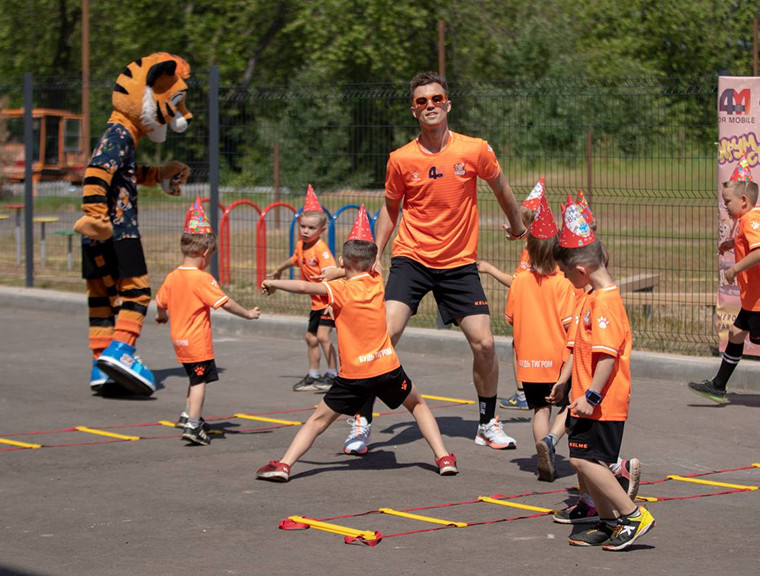
Agility Exercises
- coordination ladder drills or drawn “boxes” on the ground;
- steps forward, backward, sideways, or quick runs through the boxes;
- 3–5 runs in a row, then changing the exercise.
Low-Intensity Jumps
- jumps over a line, over a low obstacle, or side to side;
- 8–10 jumps in a row;
- 3–4 series during the session.
A Good Format: Ball Work + Physical Conditioning Combined
A useful structure is to combine football tasks with physical conditioning in one sequence:
dribble to a cone → stop the ball → do 3 jumps in place or quick steps through a ladder → short sprint → shot on goal → walk back calmly.
What This Gives the Child
This format allows the child to:
- work with the ball;
- develop speed and coordination;
- learn how to switch between tasks without losing concentration.
Game-Based Part and Cool-Down (15–20 Minutes)
Football stays football only when there is actual play, not endless cone drills.
Mini Matches and Game-Based Tasks (10–15 Minutes)
For children aged 6–12, the following formats work especially well:
- 2v2, 3v3, or 4v4 matches on a field of about 20 × 30 meters;
- touch restrictions: “no more than 3 touches,” “after a pass, you must move into space”;
- task-based rules such as:
- “score only after at least one pass,”
- “the team must complete three passes before shooting.”
A smaller number of players means more touches on the ball and more decisions for each child. That matters much more than one big 8v8 match where some children barely get involved.
Cool-Down and Review (5–10 Minutes)
The cool-down closes the session both physically and psychologically.
What It Includes
- calm walking and breathing for 2–3 minutes;
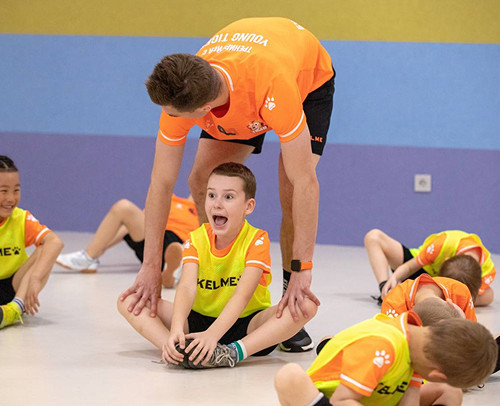
- gentle stretching for the leg, back, and shoulder muscles: 15–20 seconds per position, with no jerking;
- a short discussion:
- “What went better today than last time?”
- “What was the hardest part?”
- “What would you like to try next time?”
After this kind of training session, a child should normally:
- leave pleasantly tired, but not completely drained;
- not complain the next day about serious joint or back pain;
- be ready to come back to the field, rather than inventing ten reasons why they do not want to go.
If every session ends with tears, headaches, or complaints of strong pain in the knees or back, that is no longer about proper structure. It is a signal to review the volume, intensity, or even the training format itself.
General Physical Preparation (GPP) for Young Football Players Aged 6–12
For children aged 6–12, basic general physical preparation is more important than complex ball drills. At this age, posture, coordination, and the habit of regular movement are still being formed. Most recommendations agree that:
- children aged 6–12 need at least 60 minutes of moderate to vigorous activity per day;
- targeted strength and endurance exercises can be included 2–3 times per week, in a playful format and under adult supervision.
Below is a safe GPP framework that works well both for home sessions and for field training.
Core and Posture Exercises
A strong core helps reduce stress on the knees and lower back, especially when a child runs and jumps a lot.
Elbow Plank
- Ages 6–8: 10–15 seconds, 2–3 sets.
- Ages 9–12: 20–30 seconds, 2–3 sets.
Important: the body should stay in a straight line, without the hips lifting too high or the lower back sagging. It is better to hold for less time with proper technique than longer with poor form.
“Boat” Hold
- Starting position: lying on the stomach, arms either stretched forward or placed along the body.
- Lift the arms and legs for 5–10 seconds, using the back muscles, without jerking.
- 6–10 repetitions × 2–3 sets.
Gentle Abdominal Exercises
- Small crunches with the shoulders lifting off the floor, without pulling the head with the hands.
- 8–12 repetitions × 2–3 sets for children aged 7–12.
For most children, one core block 2–3 times per week is enough. The goal is not six-pack abs, but stability and body control.
Jumping and Speed Exercises in a Playful Format
Football requires explosive actions — starts, accelerations, and changes of direction. For children aged 6–12, this is best developed through short, game-based segments.
Suitable Options
- jumps over a line or a low obstacle, forward-backward or side to side:
8–10 jumps in a row, 3–4 series with a 30–40 second break; - frog jumps from a half-squat over 3–5 short segments of 3–4 jumps each;
- starts from different positions — sitting, lying down, sideways, or with the back turned to the running direction — over 5–10 meters.
Safety Principles
- the total number of jumps for a child aged 6–9 should be no more than 40–60 per session;
- for ages 10–12, 60–80 jumps is usually enough, provided there are no complaints and technique is not breaking down;
- between short series, there should be a pause until breathing recovers;
- no “keep going until you drop” and no obsession with records: three quality sets are far better than one exhausted child.
Stretching and Joint Mobility
Children are often naturally flexible, but without the habit of a gentle cool-down, the body gradually loses out: muscles become tight, stiffness appears, and running technique starts to worsen.
Useful Options
- seated toe reaches with a straight back: 3–4 sets of 15–20 seconds, without pushing into pain;
- ankle circles and “drawing numbers” with the foot: 8–10 times in each direction;
- quadriceps stretch: standing, heel to glute, using a wall or chair for support, 15–20 seconds per leg × 2–3 rounds.
The best time for stretching is after the active part of the training session or at the end of the day, when the muscles are already warm.
How to Fit This Into a Child’s Weekly Routine
To avoid turning sport into the army, it is enough to follow a simple structure:
- 2–3 training sessions per week with a built-in GPP block (core + jumps + a little stretching);
- on the other days, free activity: walks, yard games, cycling, or swimming.
The main sign that the workload is appropriate is simple: the child wakes up without strong soreness, goes to training without fear, and after 10–15 minutes of warm-up gets into the session instead of looking completely exhausted. If after every session the child feels broken and keeps complaining about pain, that is not a reason to glorify hard work — it is a reason to review the volume and intensity.
How to Track Your Child’s Progress in Football and Physical Conditioning
Simple At-Home Tests
You do not need professional testing to see progress:
- Ball control.
How many alternating touches with the feet (right-left-right-left) can your child do in 30 seconds? - Timed slalom.
Place 4–5 objects on the floor and time how long it takes your child to complete the route there and back with the ball. - Endurance.
A simple interval format: 30 seconds of light jogging, then 30 seconds of walking. How many of these cycles can your child complete before saying, “I can’t do any more”?
You can keep a small progress journal and repeat these tests every 2–4 weeks to see how the results change.
Progress Markers on the Field
It is important to notice not only numbers:
- your child falls less often and keeps their balance better;
- they dribble more confidently and no longer hide from the ball;
- they drop out of the game less often and are involved in more moments.
It is better to talk about progress like this:
- “You’ve become much better at dribbling, and you don’t get tired as quickly anymore,”
rather than:
- “You could have scored more goals.”
When Progress Is Real, but Not Visible in Goals
Goals are only the tip of the iceberg. Before them come:
- confidence in movement;
- proper shooting and ball-control technique;
- the ability to take the right position.
It is important to explain to your child:
- what they are already doing better now, such as running, control, and interaction;
- that goals are the result of many small steps, not the only measure of whether things are going well or not.
Frequency and Volume of Football and Physical Conditioning Training for Children Aged 6–12
Guidelines by Age Group
These are not strict rules, but sensible reference points:
Ages 6–8
- 2–3 structured sessions per week, 45–60 minutes each, with a strong focus on play;
- plus active walks and free outdoor play.
Ages 9–10
- 3–4 sessions per week, with some of them including more conscious technique work and physical conditioning;
- one short home session of 20–30 minutes can also be added.
Ages 11–12
- 3–5 active days per week: training sessions, matches, and physical conditioning;
- with at least 1 full rest day.
How to Combine Football School, Home Sessions, and Other Activities
An example week for a child aged 9–11:
- Monday — football school training (football + physical conditioning)
- Tuesday — light day: walk or free play outside
- Wednesday — football school
- Thursday — 20–30 minute home session (coordination + ball work)
- Friday — rest or just a walk
- Saturday — match or game-based training
- Sunday — free day
The main thing is to watch the child, not chase an “ideal schedule.”
Signs That It Is Time to Take a Step Back
It is worth reviewing the workload if:
- the child is constantly drained after training and does not recover properly;
- school performance drops sharply and ongoing stress appears;
- the child no longer says, “I’m tired, but I still like it,” and instead says, “I hate training and everything connected with it.”
At moments like this, taking a step back — reducing the number of sessions, changing the format, or taking a break — is not a setback in development. It is an investment in long-term interest in sport.
Basic
For families looking for regular training and quality mentorship.
Sessions per month
Each training session lasts 50 minutes.
900 AED / month
Included:
- 4 / 8 / 12 Training Sessions
- Welcome Kit
- TIger Progress Book
- Family Communication
Plus
best value
For families who want the mentor to take an active role in their child's development.
Sessions per month
Each training session lasts 50 minutes.
1 300 AED / month
Included:
- Development Plan
- Monthly Progress Report
- Tiger Time
- Priority Registration
Elite
maximum support
For families seeking comprehensive long-term mentorship across every key area of development.
Sessions per month
Each training session lasts 50 minutes.
2 000 AED / month
Included:
- Tiger Day
- Parent Consultation
- Priority Planning
- Family Strategy Session
- Yura Tiger Privileges
The Role of Parents and a Mentor in a Child’s Safe Physical Conditioning
What Falls Within the Parents’ Responsibility
Parents are not coaches, but a great deal still depends on them:
- creating the right conditions: sleep routine, nutrition, and schedule;
- monitoring the child’s health and emotional state;
- supporting interest, rather than turning training into an “adult project.”
An important rule:
A parent is not a “second coach,” but a partner to both the child and the specialist.
Where a Specialist and a Mentor Are Needed
There comes a point when:
- the workload increases;
- the child needs more precise exercises and technical correction;
- questions arise around character, confidence, and emotional regulation.
This is where a specialist comes in:
- a football coach — if the main goal is sport;
- a children’s sports mentor — if the focus is not only on physical development, but also on emotions and habits.
A mentor helps connect football, physical conditioning, and the child’s overall development into one clear path, rather than a set of unrelated activities.
How to Choose the Person You Trust With Your Child
Questions you can ask yourself and the specialist:
- Is it clear to the child what is happening during the sessions?
- How does the specialist explain exercises: “do it because I said so,” or through meaning and play?
- How do they respond to mistakes: by criticizing, or by helping the child understand and try again?
- Is there communication not only with the child, but also with the parent: can concerns be discussed, can questions be asked?
The person you trust with your child is not working only with the body — they are also influencing self-esteem, the child’s attitude toward sport, and their attitude toward themselves.
Mentorship in Dubai
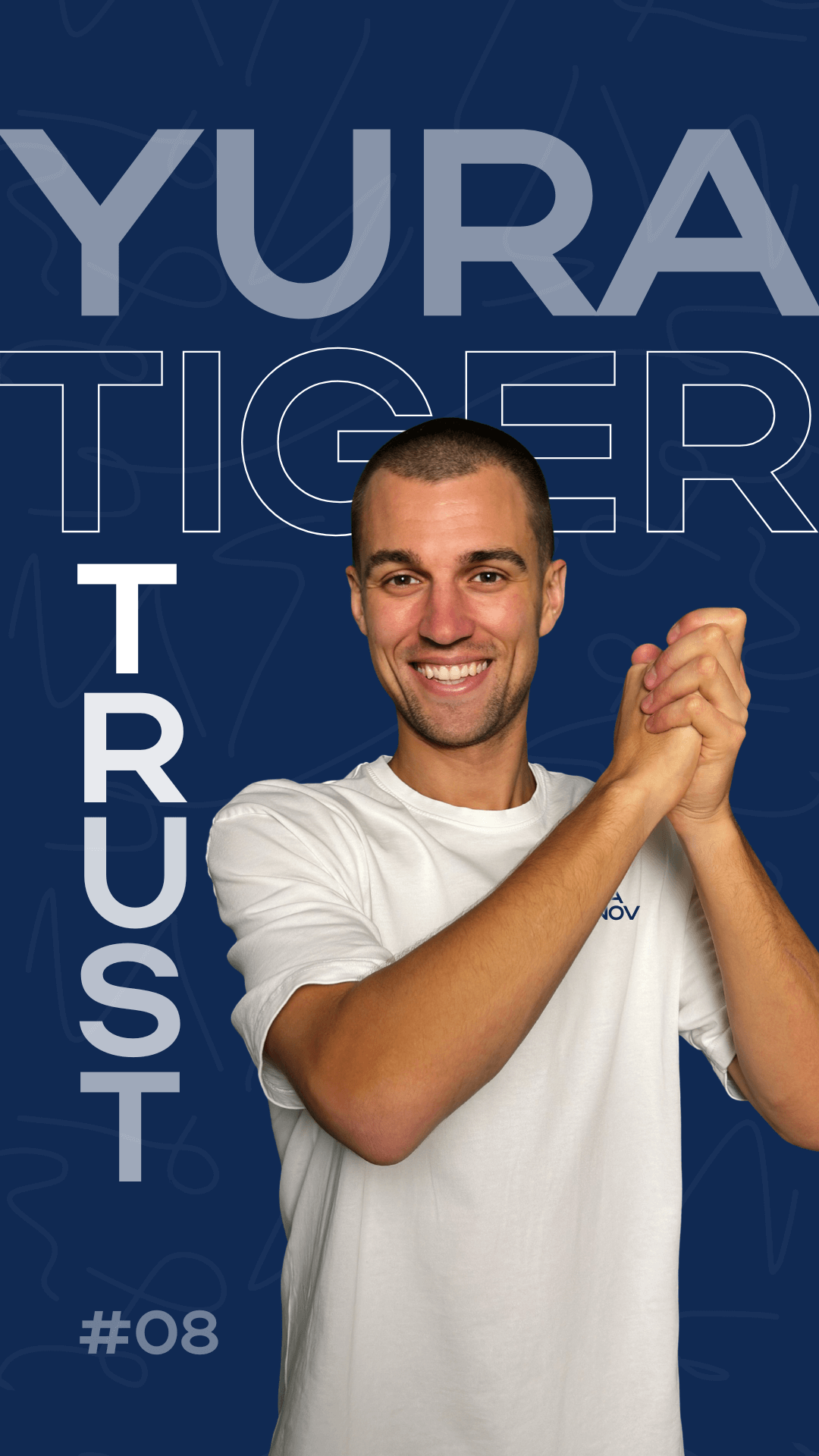
I work in Dubai as a children’s sports mentor. For me, sport is not about “raising a football player at any cost,” but about helping a child become more confident, calmer, and more resilient through movement and physical conditioning. Football, ball games, and other activities are simply tools within that work, not goals in themselves.
Movement and Physical Conditioning as a Language of Communication with a Child
In my sessions, I rely on basic physical conditioning: coordination, balance, endurance, core strength, and the ability to control one’s body. Through exercises and game-based formats, children:
- learn how to cope with mistakes and tension instead of freezing in fear of doing something wrong;
- take responsibility for their decisions, both during exercises and in everyday life;
- try on different roles: a teammate, a leader, someone who supports others.
Movement and physical conditioning become a language of communication. What matters most is not “how hard a child can kick the ball,” but how they behave when something does not work, when they get tired, or when they face difficulty.
Formats of Work: Individual Sessions, Mini Groups, and Programs
My website explains in detail how mentorship in Dubai is structured:
- in the Individual Training section, I describe one-to-one sessions and mini-group formats for children of different ages and levels of preparation;
- the Schedule and Availability section helps parents see which time slots and locations are currently open and where sessions can realistically fit into their routine;
- the Prices and Packages section brings together programs with different levels of involvement, from softer entry-level formats to deeper support throughout a season or school year.
This approach allows parents to choose not just “another activity,” but a real development path for their child, with a clear structure, goals, and level of mentor involvement.
When a Mentorship Format Is Especially Helpful
Most often, parents come to me when:
- a child is tired of traditional sports programs but still loves movement and active games;
- a lot of emotion has built up around sport — anxiety, worry, fear of mistakes — and the child needs a calmer, steadier environment;
- parents want sessions to strengthen not only the body, but also character, confidence, and the ability to communicate and cooperate.
In these situations, the focus on physical conditioning, attentive support, and mentorship helps make sport and movement a source of stability rather than a constant source of stress. The child grows not only as someone who takes part in training, but as a person who understands themselves and their boundaries better.
Conclusion: How to Build a Safe and Effective Training System
If you put everything together, the basic formula looks like this:
play + basic exercises + consistency + rest + adult support
Football and physical conditioning for children aged 6–12 are not about “making it into an academy by age 10.” They are about:
- a healthy body and emotional resilience;
- building the habit of movement and enjoying progress;
- understanding that mistakes are part of the journey, not a reason to give up.
Parents can build part of this path themselves: short home sessions, a sensible choice of training environment, and close attention to the child’s condition. And when more is needed — more structure, more depth, and real partnership — a children’s sports mentor can be brought in to help turn football and physical conditioning into a clear, connected development path rather than a set of random training sessions.