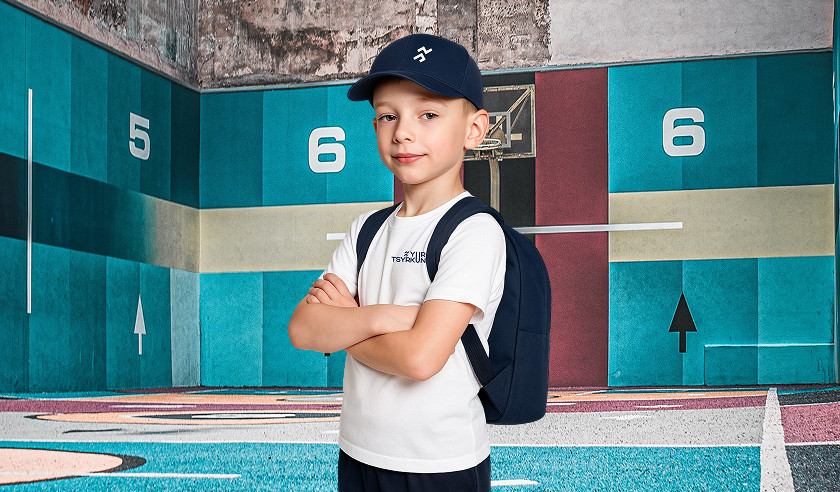

Football for a child is not just about goals and flashy tricks. Through the ball and movement, children develop coordination, endurance, the ability to interact with others, and confidence in their own abilities. But for parents, three questions usually come up right away: where should training happen — at home or only on the field, how can it be done safely, and how do you know it is actually working.
Let’s break it down step by step: what can be done at home, what should only be done on the field, how to build a safe routine, and when it makes sense to involve another adult — a children’s sports mentor.
Why It Makes Sense to Practise Football at Home, Not Just in a Training Program
A football program gives a child important things: a team, a coach, a field, and a game-like atmosphere. But training 2–3 times a week usually adds up to only about an hour or an hour and a half of activity. For a growing child, that is often not enough, especially if the rest of the time is spent at school, doing homework, and using gadgets.
Short home sessions help:
- maintain regular movement between training sessions;
- develop coordination, ball feel, and agility in a calmer environment;
- strengthen the parent-child connection through play, not only through “go check your school diary.”
It is important to understand that football at home is not a “mini professional club,” but a complementary format. Its purpose is to support health, interest, and basic skills — not to turn the apartment into a training base.
Basic
For families looking for regular training and quality mentorship.
Sessions per month
Each training session lasts 50 minutes.
900 AED / month
Included:
- 4 / 8 / 12 Training Sessions
- Welcome Kit
- TIger Progress Book
- Family Communication
Plus
best value
For families who want the mentor to take an active role in their child's development.
Sessions per month
Each training session lasts 50 minutes.
1 300 AED / month
Included:
- Development Plan
- Monthly Progress Report
- Tiger Time
- Priority Registration
Elite
maximum support
For families seeking comprehensive long-term mentorship across every key area of development.
Sessions per month
Each training session lasts 50 minutes.
2 000 AED / month
Included:
- Tiger Day
- Parent Consultation
- Priority Planning
- Family Strategy Session
- Yura Tiger Privileges
Football at Home: How to Set Up the Space, Equipment, and Safety Rules
Where Your Child Can Train: Apartment, Yard, or Park
The space determines what kind of load and exercises are appropriate.
At home, suitable options include:
- a spacious room without sharp corners or fragile objects;
- a hallway where your child can move back and forth;
- a soft ball and exercises that do not involve hard kicks.
In the yard or on an outdoor court:
- a flat surface without holes, broken glass, or slippery areas;
- ideally, a fenced space such as a mini-pitch, court, or school sports ground.
In the park:
- an area with even grass, without roots, bumps, or uneven ground;
- enough room for a short run-up and changes of direction.
What is definitely not suitable:
- slippery laminate or tile floors without footwear that provides proper grip;
- narrow hallways with furniture, glass doors, or low-hanging light fixtures;
- playing late in the evening when neighbors are trying to rest.
Equipment for a Child’s Home Football Practice
A basic set is enough.
Ball
- a soft or rubber ball for indoor practice;
- a standard ball of the correct size and weight for outdoor use, based on the child’s age.
Markers
Cones, plastic markers, pieces of tape, or ribbons can be used to mark goals, lines, or training zones.
Improvised goals
Two objects such as bottles, cones, or boxes are already enough to create a target for shooting.
At home, it is better to focus on accuracy and direction rather than power.
Footwear and clothing
- at home: barefoot or in socks or slippers with non-slip soles;
- outdoors: trainers or football boots suitable for the surface, whether grass or artificial turf.
The equipment should be simple, practical, and safe. No pointless extras for the sake of appearance — better less, but safer.
Basic Safety Rules: So Home Football Does Not End in Injury
There are a few basic rules worth going over with your child:
- always start with a warm-up, even if the session will only last 20–30 minutes;
- never play through pain: if something hurts or sharp discomfort appears, stop right away;
- no rough challenges at home: pushing, tripping, or jumping off furniture is off-limits;
- the ball should never be kicked toward windows, the TV, or shared walls — off-limit zones should be defined from the start;
- an adult should be nearby, or at least within hearing distance and able to step in if needed.

Home Football Training: 20–30 Minutes That Actually Make a Difference
A short but well-structured session works far better than an hour of chaotic play. The goal is not to wear your child out, but to give them a clear and complete training session.
Example of a Home Session Structure
A 20–30 minute session at home can look like this:
5–7 minutes — warm-up without the ball
- arm and leg circles;
- squats, bends, and light jumps;
- simple coordination tasks such as side steps or forward-and-backward movements on command.
10–15 minutes — ball work
- dribbling in a small space, forward and backward or around markers;
- stopping the ball with the sole or the inside of the foot;
- passes against a wall or to an adult, if there is a safe space for that.
5–7 minutes — game element and cool-down
- a mini challenge, such as: “Can you dribble around all the markers in one minute without losing the ball?”
- light stretching for the legs and back;
- a short conversation: “What did you enjoy?” and “What worked well today?”
The key thing is to have a clear ending. Your child should understand that the training session is over, and now it is time to move on to normal daily activities.
Types of Exercises That Are Safe to Do at Home
The following usually work well:
- dribbling exercises with small, controlled steps;
- changing direction on command (“stop,” “right,” “left”);
- accuracy tasks: passing the ball into a marked zone or gently rolling it between two objects;
- coordination games such as “forbidden movement,” where one movement is not allowed and the child has to react quickly.
The following are not recommended:
- powerful shots;
- jumping and sliding movements;
- any format where there is a high risk of bumping into furniture.
How to Involve a Parent Without Turning It Into Boot Camp
Football at home is not an exam — it is a shared activity. The adult’s role is to:
- organize the space and set the rules;
- give the task and offer support (“let’s try again — that was already better”);
- praise effort, not just the result.
The less shouting and post-session criticism there is, the more likely it is that the child will want to do it again tomorrow.
Football on the Field or Sports Ground: What Safe Training Should Look Like for a Child
Home and field training serve different purposes. On the field, a child learns how to act as part of a team, deal with opposition, and play the game for real.
A 60–75 Minute Training Structure
A classic children’s training session usually looks like this:
- 10–15 minutes — warm-up and general physical preparation
Light jogging, joint mobility exercises, and coordination work. - 20–25 minutes — technique and ball exercises
Dribbling, passing, shooting, ball control, and exercises in pairs or groups of three. - 20–25 minutes — game-based part
2v2, 3v3, 4v4 formats, relays, and active ball games. - 5–10 minutes — cool-down and review
Light stretching, breathing recovery, and a short discussion of the session.
If a football program turns into “just playing a match” without proper warm-up or technical work, that is a reason to question the quality of the process.
Equipment and Protection on the Field
The basic safety kit includes:
- shin guards to protect the lower legs;
- footwear suited to the surface, such as trainers or football boots for grass or artificial turf;
- a ball that matches the child’s age and size;
- clothing appropriate for the weather, taking wind, sun, and temperature into account.
Parents should feel free to ask the coach exactly what is needed and make sure the child is equipped not just “with whatever works,” but in a way that is genuinely safe.
Climate and Conditions: Especially Important in Dubai
In Dubai and other hot regions, safety also includes:
- choosing the right time of day — morning or evening sessions instead of the midday heat;
- a proper hydration routine, with water at training treated as a must, not an afterthought;
- breaks in the shade, especially for younger children;
- adjusting the workload: fewer sprints, more exercises with pauses.
How to Combine Football at Home and on the Field: A Sample Weekly Plan
The question “How much training is actually right for a child?” worries almost every parent.
Examples by Age and Level
These are not medical standards, but sensible reference points:
Ages 6–8
- football program: 1–2 training sessions per week;
- home: 1 short session of 20–25 minutes on a free day.
Ages 9–12
- football program: 2–3 training sessions;
- home: 1–2 short blocks focused on coordination, ball work, or play with a parent.
Teenagers 13+
- football program: 3+ training sessions, if they are part of a team;
- home: short individual sessions focused on specific goals such as shooting, coordination, or general physical preparation.
There should always be at least one day without sport, when the body can simply rest.
How Not to Overload Your Child
Signs that the workload is too high:
- your child often complains of fatigue, headaches, or pain in the muscles and joints;
- their interest in training drops sharply;
- irritability, tearfulness, or sleep problems begin to appear.
If this is not a one-off case but a constant pattern, the schedule should be reviewed by reducing some of the workload and giving the child more time to recover.
Combining Home Sessions with Football School and a Coach
If your child already attends a football program, the best approach is to:
- discuss the idea of home training with the coach: what is worth reinforcing and what is better left alone;
- ask for simple “homework” — 2–3 exercises that can be carefully built into the routine;
- avoid turning home sessions into something that clashes with or overrides what the coach is teaching.
Basic
For families looking for regular training and quality mentorship.
Sessions per month
Each training session lasts 50 minutes.
900 AED / month
Included:
- 4 / 8 / 12 Training Sessions
- Welcome Kit
- TIger Progress Book
- Family Communication
Plus
best value
For families who want the mentor to take an active role in their child's development.
Sessions per month
Each training session lasts 50 minutes.
1 300 AED / month
Included:
- Development Plan
- Monthly Progress Report
- Tiger Time
- Priority Registration
Elite
maximum support
For families seeking comprehensive long-term mentorship across every key area of development.
Sessions per month
Each training session lasts 50 minutes.
2 000 AED / month
Included:
- Tiger Day
- Parent Consultation
- Priority Planning
- Family Strategy Session
- Yura Tiger Privileges
The Role of Parents: Support, Not Pressure
Sometimes one careless phrase from an adult can destroy a child’s motivation faster than a bad match.
How to Talk About Football with Your Child
What helps:
- questions about feelings and experience: “What did you enjoy?”, “What was the hardest part?”, “What new thing did you try?”
- focusing on effort: “You really worked hard today,” “I can see you’re becoming more confident with the ball”
- being willing to listen, not just to talk
Common Mistakes Parents Make
Some of the things that most often damage motivation are:
- constant post-match or post-training “breakdowns” after every session;
- comparisons with other children (“Look how he plays”);
- phrases like “Don’t embarrass yourself,” “Pull yourself together,” or “You’re letting the team down.”
In that kind of atmosphere, a child stops talking about pain, tiredness, and fears — and that already becomes a risk to both health and safety.
A Few Important Anchors
- Home should be a place of recovery and support, not an office for analyzing mistakes.
- Football is part of a child’s life, but it is not the only measure of whether they are “doing well” or “doing badly.”
- A child should have the right to say, “I’m tired,” and be heard.
Progress Plan: How to Tell Whether Football Is Really Helping Your Child Grow
It is important for parents to see that the effort is paying off, but measuring progress only by the number of goals scored is a dead end.
What Counts as Progress in Football for a Child
Signs that football is doing its job:
Technique
- your child controls the ball better;
- they trip less often and lose the ball less often in simple situations.
Physical development
- they can run longer without getting heavily out of breath;
- exercises that used to feel difficult are now easier to complete.
Behavior and character
- they handle losses and mistakes more calmly;
- they are able to apologize when they bump into or hurt another child;
- they take responsibility for their actions (“I didn’t finish that moment well today” instead of “It was all the referee’s fault”).
A Simple “Football Journal” at Home
A very simple tool:
- a small notebook or a note in your phone;
- after training, your child answers 2–3 questions, with help from an adult if needed:
- What went well today?
- What felt difficult?
- What would I like to try next time?
This helps create a sense of a journey, rather than a set of disconnected training sessions.
When It Is Time to Slow Down and Rethink the Format
Reasons to pause and reassess:
- chronic fatigue and no joy in the game;
- постоянные complaints about pain that do not go away after rest;
- strong tension around football within the family — arguments, tears, threats like “I’ll pull you out of the program.”
Sometimes the right decision is to reduce the number of training sessions. Sometimes it is to change the club or the coach. And sometimes it is to step away from football for a while and try another form of activity, while still keeping respect and support for the child.
When a Children’s Sports Mentor Is Needed: Where Home Resources Reach Their Limit
Sometimes the combination of “parent + football program + home training” is no longer enough to handle the task.
Signs That a Family Needs Outside Support
It is worth considering a children’s sports mentor if:
- the child is constantly close to giving up football, but it is clear that the sport still matters deeply to them;
- conflicts regularly arise within the team, with the coach, or with parents around sport;
- strong fears, anxiety, or self-esteem issues begin to show;
- the parent feels they are turning either into a “prosecutor” or an “indifferent observer” and no longer knows how to respond differently.
How a Children’s Sports Mentor Differs from a Football Coach
A traditional coach usually focuses on:
- technique, tactics, and physical conditioning;
- the team’s competitive results.
A children’s sports mentor:
- uses football and movement as tools for a child’s personal development;
- works a great deal with the emotional side, discipline, and communication;
- stays in contact with parents and helps them build healthy boundaries at home;
- looks at the bigger picture: not “how to win the next match,” but “how to help the child become more resilient, confident, and healthy.”
Mentorship in Dubai: How I Work with Children
I live and work in Dubai as a children’s sports mentor. In my work, football is not a goal in itself, but a language of communication with the child. Through exercises, games, and match-based elements, children and teenagers learn to:
- cope with mistakes and pressure;
- take responsibility for their decisions, both on the field and beyond it;
- be part of a team without losing themselves.
On my website, I explain in detail how this works in practice:
- in the Individual Training section, I describe one-to-one sessions and mini-group formats for children of different ages;
- the Schedule and Availability section shows which time slots and locations in Dubai are currently open;
- the Prices and Packages section includes programs with different levels of involvement, from softer entry-level formats to deeper support throughout the season.
This mentorship format is designed for families who want more than simply “sending a child to football.” It is for those who want to build, through sport, a deeper path of physical, emotional, and social development.
Quick Checklist for Safe Football Training at Home and on the Field
Before Training
- check how your child feels: no fever, headache, or complaints of sharp pain;
- choose suitable clothing and footwear for the weather and the surface;
- prepare the space by removing dangerous objects and checking the ground or floor;
- plan a warm-up, even for a short home session.
During Training
- monitor your child’s fatigue, mood, and focus;
- include breaks for water and rest;
- do not push your child to continue through pain or obvious discomfort;
- remind them that mistakes are part of learning, not a reason for punishment.
After Training
- do 3–5 minutes of light cool-down and stretching;
- talk with your child about what they enjoyed and what went well;
- if needed, make a short note in the “football journal”;
- if unusual pain or severe fatigue appears, allow time for recovery and, if necessary, consult a doctor.
Football at home and on the field can become a powerful source of growth for a child — if the adults around them build a sensible routine, pay attention to safety, and remember that the main goal is not to “produce a champion,” but to help the child grow up healthy, resilient, and willing to move. And then, if desire, opportunity, and the right mentors come together, the field itself will show where the path can lead next.