
Football remains one of the most popular sports for children. Parents see in it movement, discipline, teamwork, and a chance to build character. But as soon as it comes down to specifics, a question appears — one that is rarely asked out loud, yet almost always sits in the back of their minds:
“What is actually better for my child: group football training or individual sessions with a coach?”
There is no universal answer. Every child is different in terms of personality, starting level, health, experience, family routine, and goals. In this article, we will look at what truly distinguishes these formats, which children each one suits best, how they can be combined, and at what point it makes sense to bring in not only a football coach, but also a sports mentor who works with the child on a broader level than just “pass–shot–goal.”
Why a Child Needs Football and Regular Training in the First Place
Before comparing group and individual football training, it is worth honestly answering a more fundamental question: why does your child need sport at all, and football in particular?
Football supports development on several levels at once:
- Physical level.
It helps develop coordination, endurance, speed, strength, and balance. A child learns to control their body, navigate space, handle physical нагрузку and recover afterward. - Psychological level.
Through the game, children build discipline, learn to finish what they start, and make decisions under time pressure. They experience both wins and losses and gradually learn to manage their emotions without falling apart after setbacks. - Social level.
Any team sport is also training in communication: learning how to agree, listen, compromise, support others, ask for help, and stand up for oneself.
Once these layers are clear, the choice between group and individual football training stops being a battle of formats and becomes a more useful question: “Which format will best support my child’s development right now?”
Basic
For families looking for regular training and quality mentorship.
Sessions per month
Each training session lasts 50 minutes.
900 AED / month
Included:
- 4 / 8 / 12 Training Sessions
- Welcome Kit
- TIger Progress Book
- Family Communication
Plus
best value
For families who want the mentor to take an active role in their child's development.
Sessions per month
Each training session lasts 50 minutes.
1 300 AED / month
Included:
- Development Plan
- Monthly Progress Report
- Tiger Time
- Priority Registration
Elite
maximum support
For families seeking comprehensive long-term mentorship across every key area of development.
Sessions per month
Each training session lasts 50 minutes.
2 000 AED / month
Included:
- Tiger Day
- Parent Consultation
- Priority Planning
- Family Strategy Session
- Yura Tiger Privileges
What Is the Difference Between Group and Individual Football Training for Children?
The phrase “football: group training or individual sessions” may sound as if these are two competing camps. In practice, they are simply two different tools designed to solve different tasks.
Goals and Objectives of Group Football Training
In group training, a child:
- learns the fundamentals of technique — dribbling, passing, receiving the ball, shooting, and movement;
- gains match experience through small-sided games;
- gets used to structure: warm-up, drills, game, cool-down;
- learns to be part of a team — sharing the ball, the field, the coach’s attention, and the results.
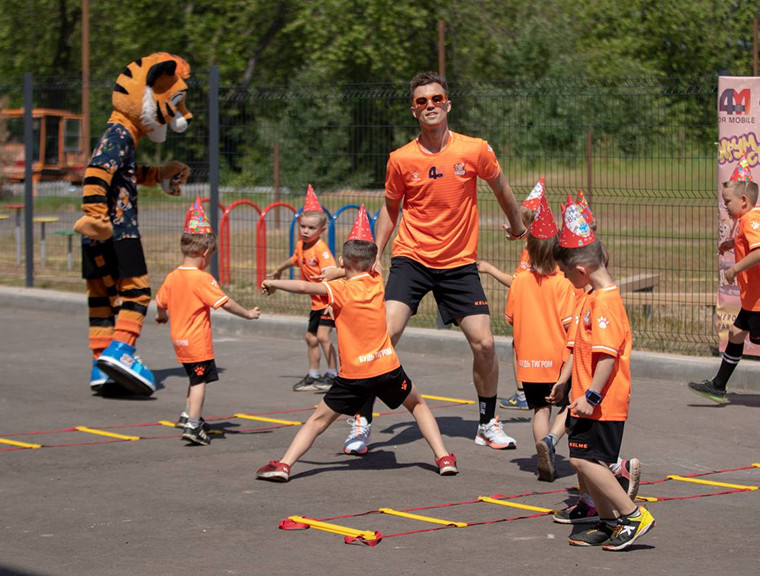
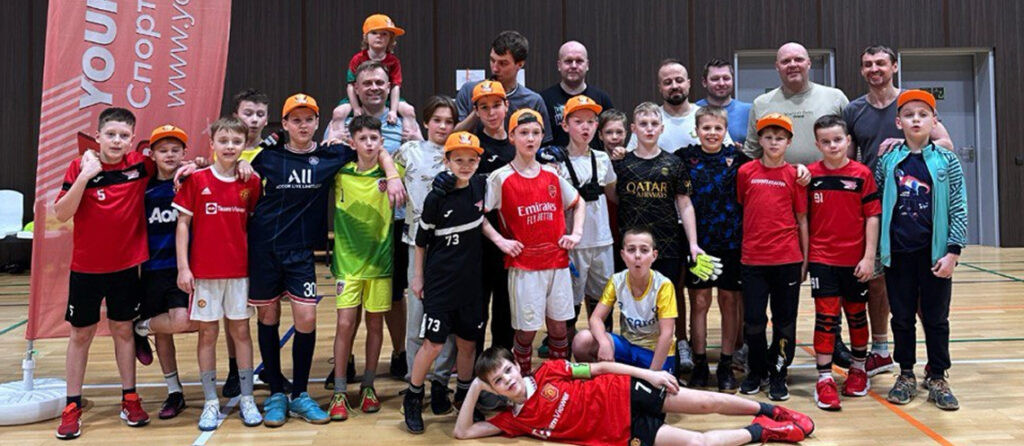
Group football training is especially valuable because it gives a child the experience of “I am not alone”: there are peers nearby, and there is space for friendship, competition, shared wins, and shared losses.
This is a strong format if the goals include socialization, discipline, physical activity, and getting used to the very idea of “I go to training.”
Goals and Objectives of Individual Football Training
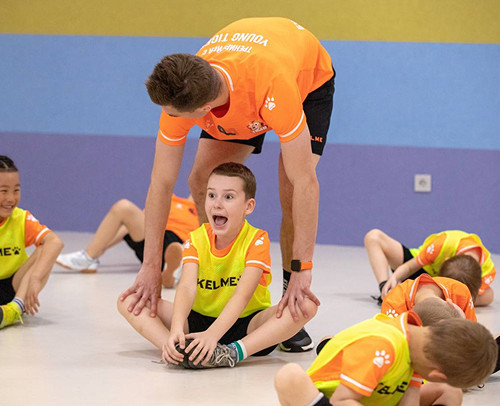
An individual session is a format where the coach’s full attention is focused on one child. As a rule, individual football training is used to:
- improve weak areas in a targeted way such as coordination or specific technical skills;
- help a child catch up with the group if they are objectively behind;
- prepare for a trial, tournament, or move to a stronger team;
- provide a softer and safer starting point for children who currently find group settings difficult because of their personality or behavioral traits.
This is where an individual training plan comes in: exercises tailored to the child’s age, physical condition, psychology, and the family’s goals. In this format, it is easier for the child to ask questions, pause, talk through how they feel, and receive feedback not in passing, but in the moment.
What a Team Gives a Child — and What Personal Attention from a Coach Gives
You can think of it like this:
- Group football training = communication, team spirit, match experience, and overall discipline.
- Individual football training = faster technical development, work on details, and greater confidence through focused adult attention.
The key conclusion is this: the question is not whether group training is “good” and individual training is “bad,” or the other way around. The real question is which format best matches the current needs of a particular child.
Who Group Football Training Is Best Suited For
The group format is not just “many children and one coach.” It comes with its own rhythm, atmosphere, and dynamic.
A Child’s Character and Temperament
Group football training is usually a good fit for children who:
- are naturally drawn to peers, enjoy socializing, and like an active, lively environment;
- are able to accept shared rules and function within basic boundaries;
- generally feel comfortable in a noisy, energetic setting.
If a child is emotionally stable and adapts relatively quickly to new people and spaces, a group can become a strong resource for them: new friends, shared experiences, and a sense of belonging.
That said, this is not a rigid rule. Group training can also be beneficial for shy children, but they usually need a bit more time and a more sensitive coach.
When Socialization and Discipline Are the Main Goals
If the family’s key goal is something like, “We want our child to spend less time on gadgets, move more, and learn to interact with others,” then group football training often becomes the best starting point:
- there is a schedule and regularity;
- there is a team and a kind of personal “micro-world”;
- there is an adult who is not a parent, but also not a strict teacher — a coach who sets boundaries.
This format works well as a school of discipline and interaction, even if the child does not stay in football for the long term.
Situations Where a Group Is the Best First Step
Group football training makes the most sense as a starting point if:
- the child is just getting introduced to sport, and you are not yet sure whether it is truly their thing;
- you want to reduce the risk of burnout from a format that feels too intense or too serious too soon;
- the priority is enjoyment and movement rather than the fastest possible progress.
Who Needs Individual Football Training — and When
The individual format usually comes into focus when a standard group program no longer addresses all of a child’s needs.
Late Start or a Rapid Increase in Demands
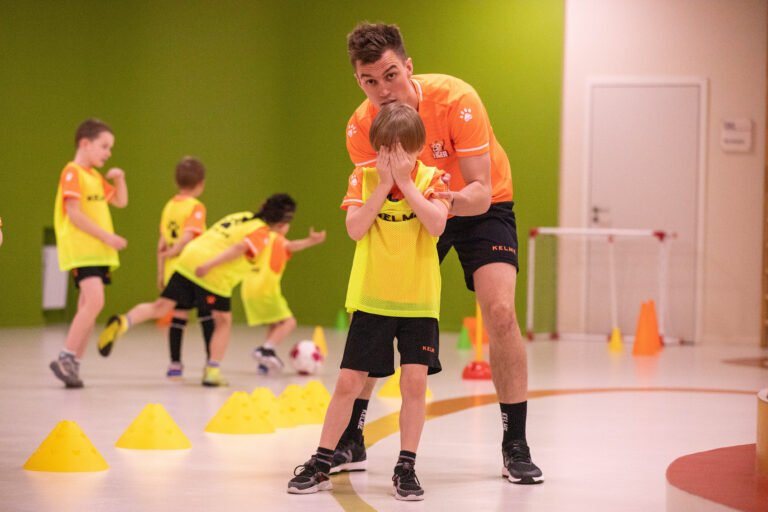
A common scenario: a child starts football at the age of 8 to 10, while most of the children in the group have already been training for 2 to 3 years. Objectively:
- they may be behind in technique and coordination;
- in motivation, they may actually be ahead of many others — “I want to, but I can’t do it yet.”
In this situation, individual football training helps the child:
- learn the basic elements more quickly;
- improve physical readiness;
- get rid of the feeling of “I’m worse than everyone else,” which often destroys the desire to keep training.
There is also the opposite scenario: a child is clearly ahead of the group and begins to stagnate because they are no longer being challenged. In that case, individual sessions help them break through the plateau and maintain their interest.
Behavioral and Attention-Related Factors
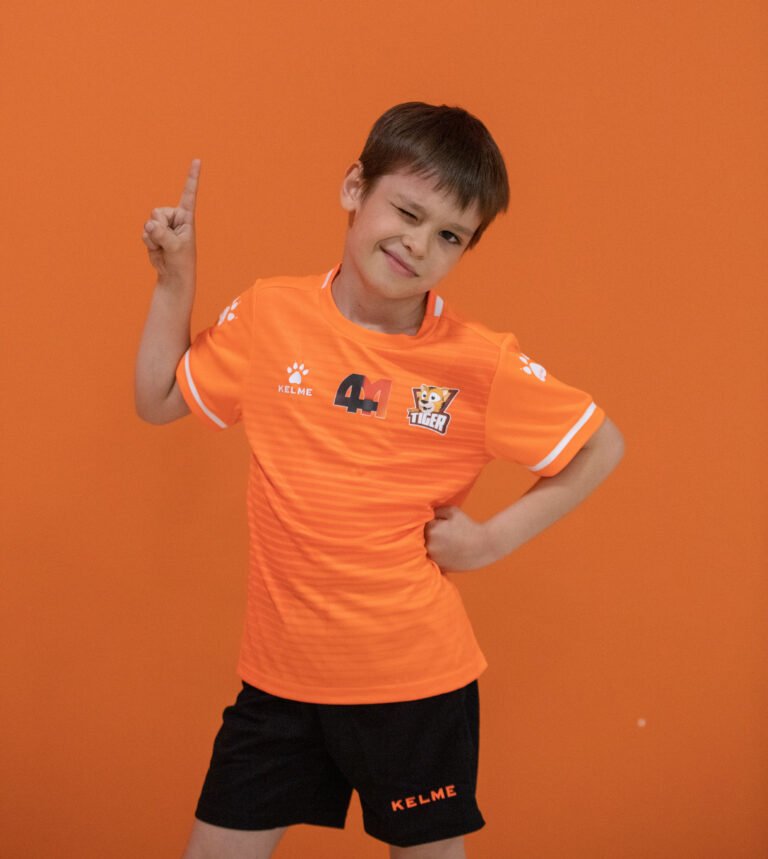
Individual football training can provide a softer and safer environment for children who have:
- pronounced anxiety, fear of being judged, or strong shyness;
- difficulty concentrating or impulsive behavior;
- trouble accepting rules and boundaries in a large group.
Where group training turns into constant conflict, the individual format gives the child time to build a healthier relationship with sport and with the adult guiding them, before returning to the team environment.
When a Personal Football Coach Is a Necessity, Not Just an Option
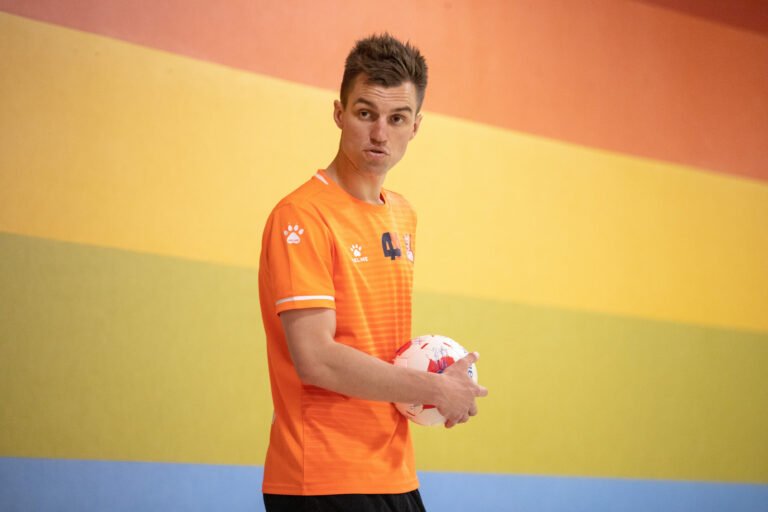
Sometimes the direction is already clear:
- there are plans to try out for a school or academy;
- serious competitions are coming up;
- the child has a high level of motivation and obvious potential.
At that point, individual football training stops being an “extra option” and becomes a real tool that:
- allows the child to progress faster than would be possible in a general group;
- helps refine exactly the elements that are critical for the next level;
- gives the child the feeling that “someone is working with me directly and investing in me.”
How to Combine Group and Individual Football Training: A Hybrid Model
In real life, the winning approach is often not “either-or,” but a combination of both.
Common Setups: “Group + 1 Individual Session”
The most common model looks like this:
- 2–3 group football training sessions per week;
- 1 individual session where the coach works on the child’s specific skills.
This format makes it possible to:
- keep all the benefits of team training — communication, game experience, and atmosphere;
- while also addressing weak areas in a targeted way and supporting the child’s motivation.
For older children, this may also mean 2 individual sessions during periods of preparation for tournaments or trials.
How Not to Overload a Child
It is important to remember that sport should be part of a child’s life, not the whole of it.
Signs of overload include:
- the child often complains of fatigue, headaches, or says they “don’t feel like doing anything”;
- their mood drops sharply before training;
- sleep gets worse and irritability increases.
The adults’ task is not to turn the training schedule into the calendar of a top executive, but to leave room for free play, family, friends, and simply doing nothing.
How to Track Progress
If you only look at goals scored and match results, disappointment comes quickly. It is far more useful to notice:
- how the child feels in the group — whether they have become more confident, calmer, and braver;
- how their attitude toward mistakes is changing — whether they can lose without falling apart;
- how their physical abilities are developing — endurance, coordination, and speed of decision-making.
In both group and individual formats, it is important to regularly get feedback from the coach or mentor and discuss the child’s progress with them.
Money, Schedule, and Logistics: A Parent’s Practical Perspective
The reality is that the choice between group and individual football training is shaped not only by methodology, but also by everyday practical considerations.
The Cost of Group and Individual Training
Group sessions are usually:
- more affordable per session;
- offered through monthly or seasonal memberships;
- sometimes include participation in tournaments and club events.
Individual football training sessions:
- are noticeably more expensive per hour;
- are often paid for in blocks or packages;
- usually deliver faster and more visible results in specific skills.
It makes sense to look not only at the price, but also at the overall balance between cost, quality of the process, and impact on the child.
Schedule and Travel Time
It is important to consider:
- how much time the trip there and back will take;
- whether the training schedule fits into the school and family routine;
- how well the child handles evening or early-morning physical demands.
Sometimes the best option is not “the strongest club in the city,” but the one that can realistically be attended without constant stress, missed sessions, or exhaustion.
How to Discuss the Sports Budget Within the Family
A good approach is to decide in advance:
- how much the family is realistically prepared to invest in the child’s sport on a consistent basis;
- which formats fit within that budget: only group training, group plus occasional individual sessions, or a stronger focus on private training;
- how often you will review the format, for example once per season.
This reduces internal tension and helps the family avoid making decisions based purely on emotion.
When a Child Needs Mentorship More Than Just Football
Sometimes, the question “football: group training or individual sessions?” gradually turns into a different one: “How can we help a child cope more broadly with pressure, emotions, and interaction with the world — using football as one of the tools?”
This is where the format of sports mentorship comes in.
Signs That a Child Needs More Than Just a Coach
It may be time to think about mentorship if:
- the child is constantly overwhelmed during training and comes home emotionally drained and exhausted;
- they have noticeable difficulties with confidence, self-esteem, or communication with peers;
- there are behavioral traits the family is already aware of, such as ADHD, anxiety, spectrum-related conditions, or strong emotional instability.
In these cases, it is not enough to simply work on shooting technique or dribbling. What matters is helping the child build inner stability and support.
How a Sports Mentor Differs from a Football Coach
A sports mentor:
- looks at the child more broadly than through the lens of “can play / cannot play”;
- works not only with the body, but also with emotions, attention, and habits;
- communicates regularly with parents, helping them understand the child’s progress and adjust the environment around them.
In this format, football becomes one of the languages through which the adult connects with the child. It is movement, play, and contact — a way to build trust while also strengthening character, responsibility, communication skills, and the ability to handle setbacks.
Mentorship Formats: Individual, Mini-Groups, and Packages
I work in Dubai as a children’s sports mentor, and I structure my work so that the focus is always not the scoreboard, but the child — their movement, play, emotions, and gradually growing resilience. I use football as one of the tools, carefully integrating ball-based activities into a broader developmental path rather than turning training into a race for goals.
On this website, I have described the formats I work with in detail:
- in the individual training section, I outline options for one-on-one sessions and mini-group work — this helps parents understand how the sessions are structured and what the child can expect;
- the schedule and availability section shows which time slots and locations are currently open, so you can realistically assess whether it fits your family’s routine;
- in the prices and packages section, I explain the programs by duration and scope — from gentler introductory formats to more intensive long-term support.
I built this system intentionally: for parents, it is important to choose not only the type of training load, but also the level of my involvement in the child’s development — how often we meet, what we work on, and how we move forward step by step.
How to Choose a Coach and a Football Program: A Checklist for Parents
Even the right training format can fail if the coach and the overall environment are not a good fit for the child.
Professional Criteria
It is worth paying attention to:
- whether the coach has experience working specifically with children in your child’s age group;
- how they explain the purpose of training: “we are all going to become champions” or “we are working on health, technique, and character”;
- whether the club has a clear program and visible progress from one season to the next.
A good sign is when a coach can clearly explain, in simple words, what exactly the children will be doing and why.
Atmosphere and Communication Style
A strong indicator is the child’s first 2–3 training sessions:
- how the coach speaks to the children — do they shout, or do they maintain firm but respectful boundaries;
- how they react to mistakes — do they help the child correct them, or mock them in front of others;
- whether the group feels safe, or whether there is a constant fear of being criticized or punished.
If a child consistently leaves training feeling “I’m bad” or “I’m not good enough,” that is a serious warning sign.
Questions to Ask Before Starting
It is useful to ask the coach:
- How do you see the role of football in a child’s life at this age?
- How do you work with shy children or very active ones?
- How will you communicate progress and difficulties to us?
- What would you recommend for our child: group training, individual sessions, or a combination of both — and why?
The answers will show not only the coach’s football philosophy, but also their attitude toward children and parents.
Red Flags
There are situations where it is better to leave a club or coach regardless of the format:
- constant shouting, humiliation, or labeling of children;
- ignoring a child’s complaints about fatigue, pain, or discomfort;
- focusing only on results and winning at any cost;
- rude interference in areas that are the parents’ responsibility.
In those conditions, the choice between group and individual training stops mattering — what matters more is changing the environment.
How Not to Kill a Child’s Motivation for Football
There are several common mistakes adults make that destroy motivation faster than any bad training session. We cover this topic in more detail in a separate article — Football for Children: How Not to Kill Motivation — but here we will focus on the key points directly related to choosing the right training format.
The Role of Parents: Support Without Pressure
What helps:
- taking an interest in the child’s feelings: “What did you enjoy?”, “What was difficult?”, “What did you learn today?”;
- focusing on effort and progress, not only on goals and wins;
- being willing to listen, not just to instruct.
What harms:
- constant analysis of mistakes after every training session;
- comparing the child to others (“Look how he plays”);
- phrases like “Don’t embarrass yourself,” “Pull yourself together,” or “You’re letting the team down.”
Even the most well-designed program and the best training format will not withstand constant pressure at home.
Losses, Setbacks, and “I Don’t Want to Go to Training”
A drop in motivation is a normal part of the process. What matters is being able to tell the difference between:
- a temporary dip in motivation caused by fatigue, a bad match, or conflict in the group;
- a deeper, ongoing aversion, when the child suffers consistently from the very fact of going to training.
In the first case, what helps is rest, conversation, and sometimes a small adjustment to the format or training load.
In the second case, an honest assessment is needed: perhaps the child is not suited to this particular club, coach, training format, or even to football itself.
When to Change the Format or the Sport
It may be time to reconsider the choice if there is:
- chronic stress around training;
- worsening health, sleep, or mood;
- no real sense of growth despite major effort.
Sometimes the solution is to switch from group football training to individual sessions, or the other way around. Sometimes it means stepping away from football for a while, so the child can rest and try a different type of activity.
Quick Checklist: Group Training, Individual Sessions, or Mentorship
To sum it up:
If your main goal is health and social development
Foundation: group football training.
What matters most: the atmosphere, the coach, and a balanced workload.
Individual sessions: used only when needed, for specific areas.
If the goal is to raise the child’s level or prepare for selection
Foundation: a strong group with regular match practice.
Added support: individual football training 1–2 times per week during key periods.
What matters: a clear plan and honest communication with the coach or mentor.
If you see a lot of emotional or psychological challenges
Consider the format of sports mentorship: individual work or mini-groups, where movement and football are used as tools for the child’s overall development.
Look not only at the “training program,” but also at how the specialist builds a relationship with both your child and you, what session formats and packages they offer, and what role football actually plays in the bigger picture.
Ideally, the choice should not be framed as “which is better — group or individual training?” but rather as: which combination of formats and adults will best support your child’s path in sport and in life right now?