
Choosing a coach for your child is not about simply finding an activity close to home or picking whoever has availability this week. In reality, parents are choosing an adult who will influence not only how their child moves, but also how they relate to themselves, to mistakes, to effort, to discipline, and to their own potential. One coach helps a child open up, feel confident, and develop a genuine interest in movement. Another can quickly turn sport into pressure, boredom, or inner resistance.
That is why the question of how to choose a coach for your child should not be answered based only on reviews, polished self-presentation, or a list of qualifications. In Dubai, the usual criteria are shaped by local specifics as well: climate, training format, family logistics, location convenience, whether sessions are held indoors or outdoors, and how comfortable the child feels in a particular environment. That is exactly why parents need to understand not only how to choose a children’s coach, but also how to recognize whether a particular specialist is truly the right fit for their child.
Why Choosing a Coach Affects More Than Just Sport — It Shapes a Child’s Relationship With Themselves
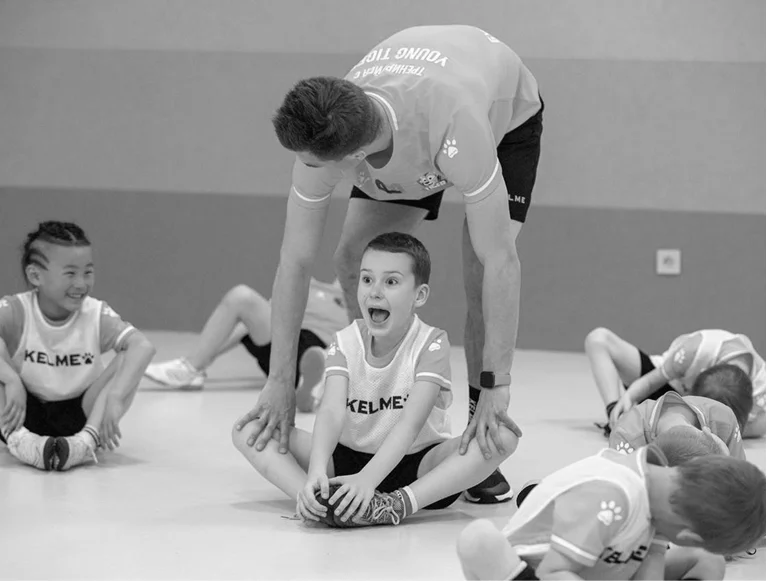
A coach influences far more than technique, coordination, or physical fitness. Through the way they communicate, a child very quickly understands whether it is okay to make mistakes, whether it is safe to try something new, whether their boundaries are respected, and whether effort is noticed — not just results. A child’s first experience in sport often stays with them for a long time: it shapes their attitude toward effort, discipline, their own body, and self-confidence.
If there is an adult nearby who sets boundaries calmly, explains without humiliation, notices progress, and does not crush the child’s character, the child begins to see training as a space for growth. But if the coach builds the process around shouting, shame, and pressure, the child may still follow instructions while becoming internally tense and withdrawn. For a parent, this is a crucial point: a good coach for a child affects not only movement, but also motivation, self-esteem, and trust in themselves.
But before choosing the right specialist, it is important to understand not only who is in front of you, but also why your child needs a coach right now.
What Are You Looking for in a Coach for Your Child
Not all parents are looking for the same thing, which is exactly why the question of how to choose a coach for your child cannot be approached with a one-size-fits-all mindset. Different goals require a different kind of adult.
For Health and General Activity
Sometimes a coach is needed simply to help a child move more, spend less time on gadgets, and become stronger, more energetic, and more resilient. In this case, a strict sports regime is usually not the goal. What matters more is finding a specialist who knows how to engage a child in movement with interest and without overload.
For Discipline and Routine
Sometimes a family’s request is really about rhythm and structure: the child struggles to stay consistent, lacks stability, or finds it hard to build the habit of finishing what they start. In that case, the right coach is someone who knows how to build discipline without pressure and does not confuse structure with harshness.
For Confidence and Social Development
If a child is anxious, shy, easily discouraged, afraid of making mistakes, or has difficulty connecting with others, it becomes especially important to understand how to choose a sports coach for your child who will not reinforce those weak points, but instead help build confidence and a sense of inner security.
For Athletic Development and Technique
If a child already has an interest in a specific sport or direction and needs structured progress, parents should pay close attention to the coach’s methodology, consistency, technique, workload, and ability to develop skills in an age-appropriate way.
When a Child Needs More Than Just a Coach
Sometimes the need goes beyond sport itself. A child may need an adult who not only runs training sessions, but also helps build confidence, healthy habits, body awareness, discipline, and inner stability through movement. In such cases, the search is no longer just for a coach, but for a mentor.
When the goal is clear, it becomes much easier to tell the difference between a truly good children’s coach and someone with nothing more than polished self-presentation.
What Makes a Good Children’s Coach
Below is a short table that helps quickly separate polished presentation from real quality of work.
| Criterion | What a Good Children’s Coach Should Have | Warning Sign |
|---|---|---|
| Experience | Real experience working specifically with children, not just a personal athletic background | “I work with everyone the same way” |
| Age-Appropriate Approach | An understanding of how goals and needs differ at ages 3–4, 5–7, 8–12, and in the teenage years | The same communication style and the same workload for everyone |
| Communication | Calm, clear instructions without humiliation | Yelling, irritation, pressure |
| Individual Approach | The ability to adapt to the child’s temperament, energy level, and degree of engagement | Working strictly by a template |
| Communication with Parents | Clear feedback and a real understanding of the child’s development path | Complete closedness and “don’t interfere with my work” |
| Safety | Warm-up, breaks, attention to the child’s condition, and a reasonable workload | Ignoring fatigue and well-being |
Experience Working Specifically with Children, Not Just a Sports Background
A former athlete and a good children’s coach are not the same thing. Working with children requires a separate skill set: understanding age-related reactions, attention span, pace of adaptation, motivation, and sensitivity. A person may be strong in their sport and still have no idea how to work with a child without pressure.
Understanding Age-Specific Needs
How to choose a children’s coach depends largely on the child’s age. With very young children, play, connection, and gentle engagement work best. With preschoolers, structure matters, but it should come through interest. With school-age children, there is already more room for rules and consistency. With teenagers, respectful dialogue, a sense of independence, and clear boundaries become essential. If a coach does not feel these differences, they quickly start working from an “adult logic,” and that often destroys motivation.
The Ability to Explain Without Pressure
A coach can be demanding, and that is normal. What is not normal is when that demand turns into rudeness, shame, humiliation, or constant irritation. A good coach maintains boundaries without destroying a child’s willingness to try.
An Individual Approach Instead of a Template
One child gets engaged quickly and enjoys competition. Another needs time to feel safe. A third loses focus quickly but responds extremely well to play and connection. That is why an individual approach is not just a nice phrase, but one of the key markers of real quality.
Communication with Parents and Feedback
Parents should understand what is happening during training, what the current focus is, where progress is being made, and where difficulties remain. This is not about control for the sake of control, but about a thoughtful and transparent process.
Respect, Boundaries, and Safety
Safety in children’s training is not only about avoiding injuries. It is also about an appropriate workload, attention to the child’s well-being, respect for their condition, a clear session structure, and the absence of pressure that causes emotional harm.
If you are looking for exactly this kind of respectful and attentive approach, you can see how it is structured on the Children’s Sports Coach page.
But even a specialist who looks great on paper does not automatically guarantee that your child will feel comfortable with them or truly benefit from working with them.
How to Tell Whether a Coach Is the Right Fit for Your Child
Choosing a coach is not only about qualifications. It is also about compatibility. Sometimes a specialist may look strong in terms of experience and presentation, yet still be the wrong fit for a particular child because the communication style is too harsh, the pace is too intense, or the format does not take the child’s personality into account.
By Temperament
A shy child needs one kind of approach. An active and impulsive child needs another. A sensitive child needs a third. The right coach does not try to break a child’s temperament, but helps them rely on their strengths while gradually building up their weaker sides.
By Your Child’s Reaction After Training
One of the most honest markers is your child’s state after the session. Do they leave feeling interested, warm, and energized? Or do they come out tense, irritated, guilty, and unwilling to return? If your child opens up after training, that is a strong positive signal. If they shut down, that is also a signal — just a worrying one.
By the Way the Coach Responds to Mistakes
Mistakes are a real test. Can the coach correct calmly, support, and explain again? Or do they immediately switch to pressure and comparison? If a child is afraid of making mistakes around a coach, their motivation will be built on fear rather than growth.
By Whether the Coach Can Engage the Child Rather Than Break Them
A good coach does not try to make a child submit to their system. They help the child engage, become interested, and experience movement as something natural, alive, and understandable. Parents should pay attention not only to technique, but also to connection: does the child feel seen, or are they simply being forced into the same mold as everyone else?
And in Dubai, there are also the specific conditions in which training takes place.
Basic
For families looking for regular training and quality mentorship.
Sessions per month
Each training session lasts 50 minutes.
900 AED / month
Included:
- 4 / 8 / 12 Training Sessions
- Welcome Kit
- TIger Progress Book
- Family Communication
Plus
best value
For families who want the mentor to take an active role in their child's development.
Sessions per month
Each training session lasts 50 minutes.
1 300 AED / month
Included:
- Development Plan
- Monthly Progress Report
- Tiger Time
- Priority Registration
Elite
maximum support
For families seeking comprehensive long-term mentorship across every key area of development.
Sessions per month
Each training session lasts 50 minutes.
2 000 AED / month
Included:
- Tiger Day
- Parent Consultation
- Priority Planning
- Family Strategy Session
- Yura Tiger Privileges
What Is Especially Important to Consider in Dubai
The local Dubai context is not just a detail here — it is part of making a sensible decision. Parents should look not simply at the fact that training is offered, but at how exactly it is organized.

Training Format — at Home, in a Gym, Outdoors, One-to-One, or in a Mini Group
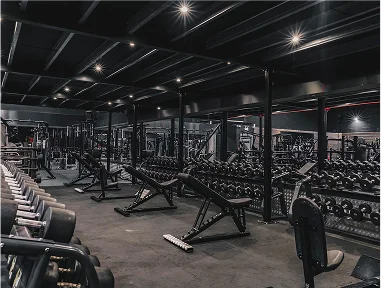
Some children do better in individual sessions, where the coach’s full attention is on them. Others respond better to a mini group, where there is more room for play, socialization, and interaction. For some families, it is also more practical when training takes place at home or close to home, so travel does not drain the child’s energy or disrupt the family’s schedule.
Heat, Hydration, and a Sensible Training Load
For children and teenagers aged 5–17, the WHO recommends an average of at least 60 minutes of moderate to vigorous physical activity per day. For children aged 3–4, the recommendation is at least 180 minutes of different types of physical activity per day, with at least 60 minutes of that being moderate to vigorous in intensity. This matters not because a child should be pushed to meet a target at all costs, but because movement is essential — and the workload should match the child’s age and condition.
Family Logistics and Location Convenience
Even a good coach may not be the right fit for a child if every trip turns into exhausting logistics. In Dubai, this matters especially: travel time, traffic, time of day, and the family’s already overloaded schedule all affect consistency and the child’s overall experience of training.
Indoor Training as an Advantage During the Hot Season
The Dubai Health Authority also highlights the risks of extreme heat and the need for precautions for children, including cooling measures and protection from overheating. For parents, this means something simple: during the hot season, an indoor format and a sensible training structure are not a luxury, but a clear sign of a practical and responsible approach.
Language, Communication, and the Child’s Comfort
A child should feel calm and able to understand what is happening. Sometimes a coach may look like the right fit on paper, yet the child still does not feel comfortable because of the pace, tone of voice, atmosphere, or overall communication style. That should not be ignored.
That is why, before the first meeting, parents should not hesitate to ask the coach a few direct questions.
What Questions to Ask a Coach Before the First Session
This section is not meant to turn the conversation into an interrogation. Its purpose is to help you understand how the person thinks and how they build the process.
- What age group do you work with most often?
This helps you understand whether the coach has real experience working specifically with children of your child’s age. - How do you adapt the training load to the child?
The answer will show whether there is a genuine individual approach or just a standard template for everyone. - What do you do if a child is shy or does not engage right away?
This is a very important question for assessing the coach’s flexibility and teaching approach. - How do you give feedback to parents?
A good coach does not cut parents out of the process. - What do you consider a good result during the first few months?
This quickly shows whether the specialist is realistic or simply selling promises. - How do you structure a session: play, technique, general physical training, communication?
This helps reveal whether the coach understands session structure and age-appropriate logic. - How do you take the child’s physical condition and mood into account?
This is one of the most important questions when it comes to safety and respect.
And even more importantly, parents should understand which signs suggest it may not be worth continuing.
Red Flags That Mean It Is Better to Look for Another Coach
Parents have every right not to put up with nonsense — even if the coach is “experienced” and “gets results.”
- yelling and humiliation;
- strictness for the sake of strictness;
- promises of quick results;
- comparing children to one another;
- ignoring the child’s physical condition;
- using the same format for everyone;
- no real communication with parents;
- the child becomes more withdrawn after sessions instead of opening up.
If a coach builds discipline through fear, a child may follow instructions — but that is not growth, it is submission. For long-term development, that kind of model is usually toxic. Especially if, after just a few sessions, you can already see that the child’s interest is fading and there is no real connection between the child and the specialist.
And this is where something important becomes clear: sometimes a child does not need just a coach, but a completely different kind of adult by their side.
When a Child Needs More Than Just a Coach, but a Mentor
Not every child needs only sport. Sometimes the need is broader: a child may need confidence, calm discipline, a sense of reliable adult support, steady connection, and encouragement without pressure. In these situations, parents often care not only about the result of each session, but about the child’s overall path — how they learn to handle difficulties, how they respond to mistakes, and how they become more focused, calm, and engaged.
When the Usual Format Is No Longer Enough
A mentorship-based format can be especially valuable if a child:
- quickly loses interest;
- feels anxious and shuts down;
- lacks self-belief;
- struggles to engage in the process;
- needs a respectful but steady structure.
Why Parents Look at More Than Just Qualifications
When working with children, what matters is not only experience, but how a person applies that experience. Yury Tsyrkunov’s approach is built around movement, respect, attention to the child’s personality, calm discipline, communication with parents, and work not only on sport itself, but also on habits, confidence, and inner stability. His path combines coaching practice, work with children, and training in related fields — from child psychology to adaptive physical education and emotional development. You can read more about this on the About Yury page.
If you feel that your child needs not only sport, but deeper guidance and support, take a closer look at the Mentorship for Children format.
To avoid making the decision emotionally, it helps to keep a short parent checklist in front of you.
Basic
For families looking for regular training and quality mentorship.
Sessions per month
Each training session lasts 50 minutes.
900 AED / month
Included:
- 4 / 8 / 12 Training Sessions
- Welcome Kit
- TIger Progress Book
- Family Communication
Plus
best value
For families who want the mentor to take an active role in their child's development.
Sessions per month
Each training session lasts 50 minutes.
1 300 AED / month
Included:
- Development Plan
- Monthly Progress Report
- Tiger Time
- Priority Registration
Elite
maximum support
For families seeking comprehensive long-term mentorship across every key area of development.
Sessions per month
Each training session lasts 50 minutes.
2 000 AED / month
Included:
- Tiger Day
- Parent Consultation
- Priority Planning
- Family Strategy Session
- Yura Tiger Privileges
Parent Checklist Before a Trial Session
- I understand why my child needs a coach right now
- I know which format suits us better: one-to-one or a mini group
- I have seen how the coach communicates with children
- I understand how the coach responds to a child’s mistakes
- I have asked about workload, safety, and session structure
- I have assessed whether my child felt comfortable after the first meeting
- I understand whether the coach maintains communication with parents
- I am confident that not only the method, but also the human approach feels right to me
Conclusion
A good coach for a child is not the strictest one or the loudest one. It is an adult around whom the child feels safe, interested, respected, and motivated to grow. That is the kind of person who helps not only improve physical fitness, but also build something deeper — a stronger foundation in movement, discipline, confidence, and self-perception.
If we answer the question of how to choose a coach for your child directly, the key is to look beyond reviews and qualifications alone. What really matters is an age-appropriate approach, individual adaptation, safety, communication with parents, the child’s reaction after sessions, and the coach’s ability to create a respectful process. And if what you are looking for is not just training sessions, but a deeper path with real attention to your child’s personality, then mentorship may be the right direction to consider.
FAQ
-
By your child’s reaction before and after sessions, the coach’s communication style, the level of safety, the child’s interest in training, and the overall sense of connection.
-
No. Reviews can be useful, but they do not replace understanding the coach’s approach, having a trial session, and assessing whether they are truly the right fit for your child.
-
For a child at the beginning, the second usually matters more. A strong athlete without a pedagogical approach may not be the right fit for a child at all.
-
Yes. The first meeting is exactly where you can see how the coach communicates, how the child engages, and whether the format is suitable at all.
-
The training format, the heat, hydration, indoor options, location convenience, and the child’s overall comfort.
-
When a child needs more than just training — for example, more confidence, calm discipline, steady support, and a deeper personal approach.